AI agent mobile app testing: what it is, how it works and when to use it
Instead of writing scripts or clicking through test cases by hand, you describe what to check and an AI agent runs it on a real phone. Here is how that actually works.
 OneGreen Team5 min read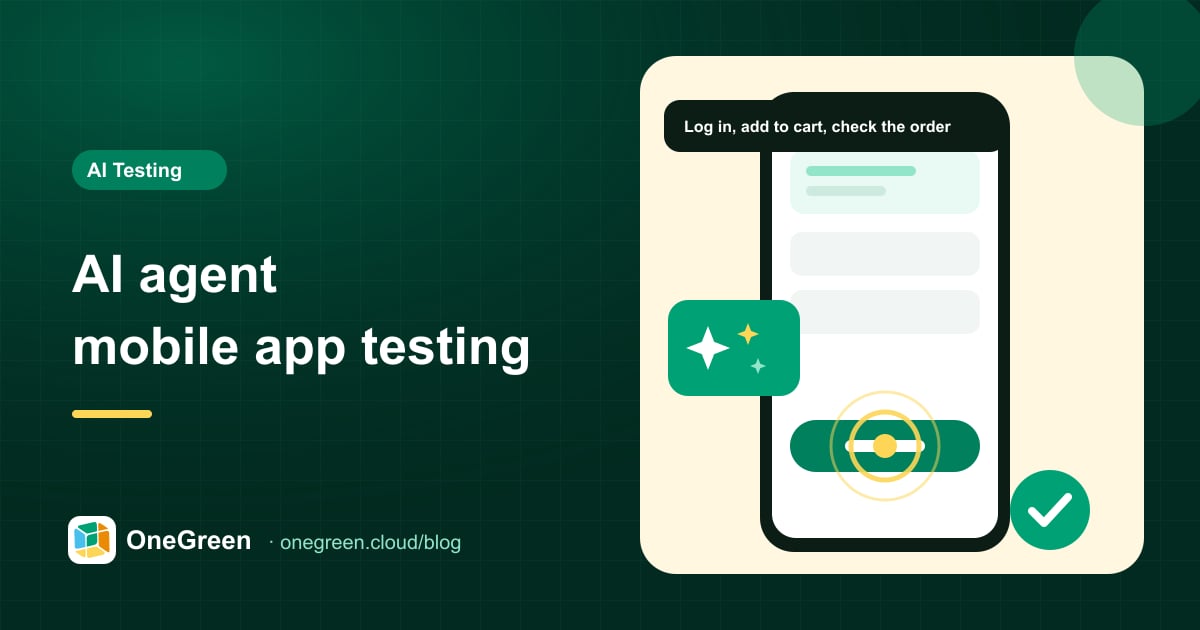
On this page
Most mobile teams live with an uncomfortable trade-off: manual testing is slow and hard to repeat, while scripted automation is fast but expensive to build and painful to maintain. AI agent testing offers a third option. You describe what should happen, and an agent operates a real phone to check it.
This article explains what AI agent testing is, how it differs from the automation frameworks you may already know, how a typical run works from start to finish, and, just as importantly, where it is not the right tool.
What is AI agent testing?
AI agent testing means handing a test goal, written in plain language, to a software agent that can see and operate an application the way a person does. Instead of a script that says "tap the element with ID btn_login", you write something like:
Log in with the test account, add any item under 200,000 VND to the cart, choose cash on delivery and confirm the order appears in the order history.
The agent reads the screen, decides which action brings it closer to the goal, performs that action, looks at the result and repeats until the goal is reached or something goes wrong. At the end it reports what it did, what it saw and whether the expected outcome happened.
Green Phone Agent applies this idea to mobile apps running on real physical phones, not emulators. The agent taps, swipes, types, plays through game levels, follows location-based flows in driver apps and handles push notifications, just as a person holding the phone would.
How it differs from scripted automation
Classic mobile automation frameworks are powerful, but they rely on selectors: element IDs, accessibility labels or view hierarchies that the script uses to find buttons and fields. That approach has three well-known costs.
- Up-front effort. Someone has to write and debug every script, usually an engineer with specific framework skills.
- Maintenance. When a designer renames a button, moves a field or adds an onboarding screen, selectors break and tests fail even though the app works fine.
- Flakiness. Timing issues, animations and unexpected pop-ups cause intermittent failures that erode trust in the test suite.
An AI agent works from the goal and from what is visible on screen, so it does not depend on fixed selectors. If the "Continue" button becomes "Next" or moves to the bottom of the screen, the agent still finds it. This is often described as self-healing: the test adapts to cosmetic UI changes instead of breaking on them.
How a test run works, step by step
1. Upload your build
You provide an Android or iOS build, or trigger a run from your CI pipeline through an API call whenever a new build is ready.
2. Describe the tests
Test cases are written in plain English or Vietnamese. Good descriptions read like instructions to a new colleague: the starting state, the steps or goal, and what "correct" looks like. Test accounts and data are provided as variables, not hard-coded into the text.
3. The agent runs on real phones
The run is scheduled on physical devices in the device lab. The agent observes each screen, chooses an action, performs it and checks the outcome. Real-device capabilities matter here: a game renders on a real GPU, a driver app reads a real GPS location, and a push notification appears in the real notification shade.
4. You get evidence, not just pass or fail
Each run produces a screen recording, screenshots of key steps, a step-by-step log of what the agent did and why, and, when something fails, a clear list of reproduction steps you can paste into your issue tracker.
When AI agent testing makes sense
AI agent testing is most valuable when one or more of the following is true:
- You have no automation yet and do not want to hire or train a team just to build a script suite.
- Your UI changes often, so scripted tests spend more time broken than useful.
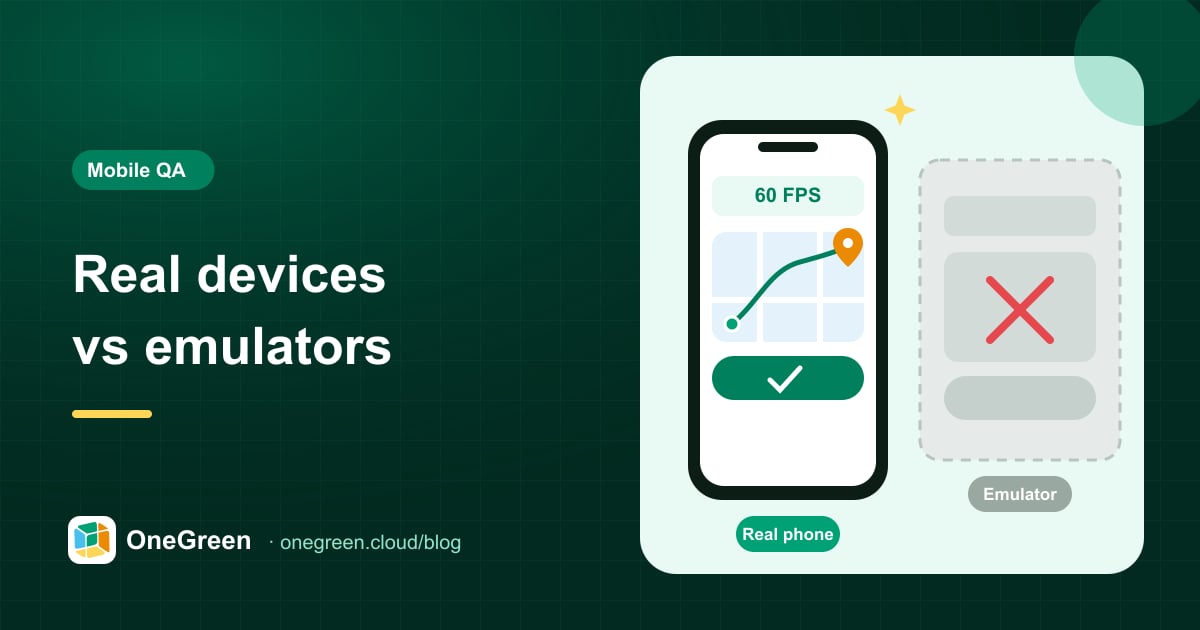
- Your critical flows involve the real world: game performance and gestures, GPS and maps in a driver app, push notifications, behaviour on mid-range phones. Emulators struggle with these. Read more in real devices vs emulators.
- Regression testing eats your release week. Running the same core journeys on every build frees testers for exploratory work and edge cases.
- Product and QA people should own test cases, not only engineers who know a framework.
Honest limitations
Any new approach deserves a sober look at its weaknesses. These are the ones we think teams should plan for.
- Vague instructions produce vague tests. "Check that checkout works" leaves too much open. Specific expected outcomes give specific, trustworthy results.
- Runs are slower than unit tests. An agent working a real phone takes seconds per step, like a person. It complements fast unit and API tests rather than replacing them.
- Pixel-perfect visual checks need care. The agent notices obviously broken layouts, but strict visual-diff requirements are better served by dedicated tooling.
- Judgement calls still need humans. Whether a new design feels right, or whether copy matches your brand voice, remains a human decision.
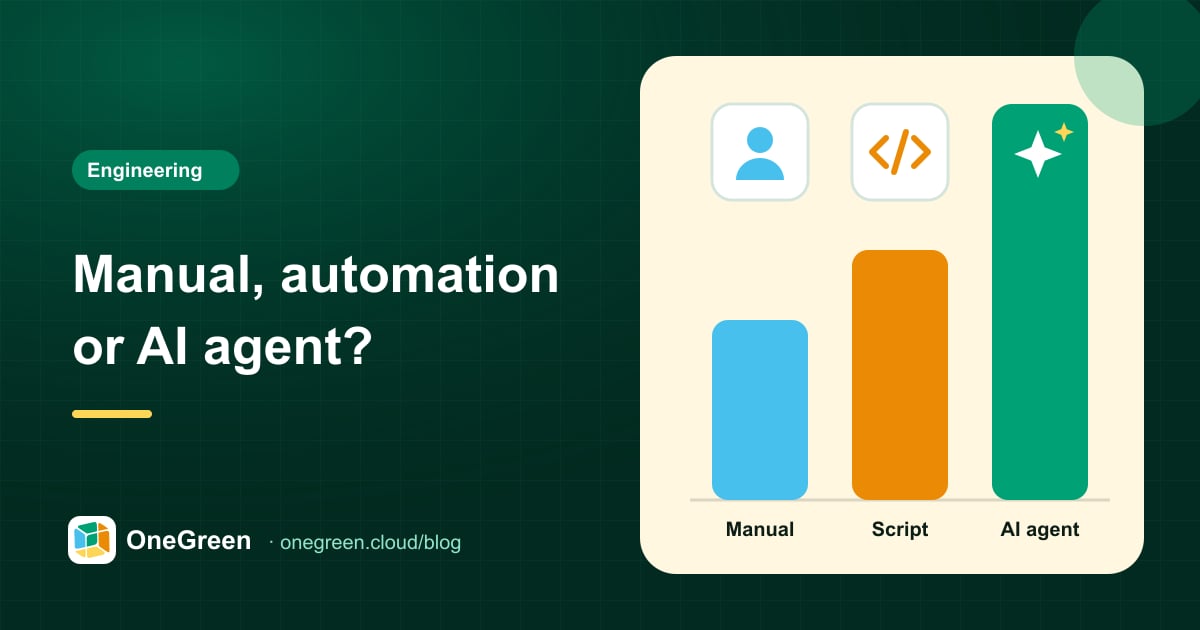
The right mental model is a tireless junior tester who follows your instructions precisely, always records evidence and never gets bored of regression, while your experienced people focus on what needs judgement. For a broader comparison, see manual vs automation vs AI agent testing.
Frequently asked questions
Do I need to change my app or add an SDK?
No. The agent interacts with your app through the screen, the same way a user does. You only need to provide a build and test accounts.
Can I write test cases in Vietnamese?
Yes. Test descriptions can be written in English or Vietnamese, and reports follow the language you choose.
What about sensitive data and test accounts?
Use dedicated test accounts and environments wherever possible. Devices are reset between sessions, and access to recordings is limited to your team.
How do I try it?
Green Phone Agent is in early access. You can see how it works on the product page or book a demo with one of your own apps.